


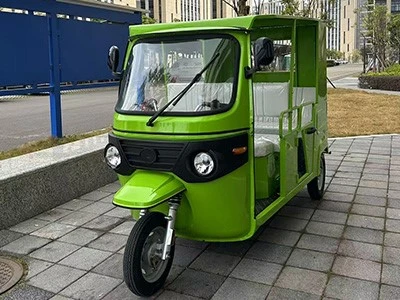
Rural farms have long faced unique challenges in last-mile delivery-remote locations with limited charging infrastructure, unpredictable transportation needs for crops and agricultural supplies, and rising fuel costs eating into profit margins. The solar electric trike has emerged as a game-changing solution, blending the flexibility of three-wheeled transport with the sustainability of solar power.
The Unique Challenges of Last-Mile Delivery in Rural Farms
Last-mile delivery in rural agricultural settings isn't just about moving goods-it's about overcoming barriers that urban logistics rarely face:
Limited charging access: Many remote farms lack access to reliable grid power or charging stations, making traditional electric vehicles impractical due to range anxiety.
Variable payload demands: Farms need to transport delicate produce (like fruits and vegetables), heavy fertilizers, or tools-requiring a vehicle that balances capacity and maneuverability.
Rough terrain: Dirt roads, uneven fields, and occasional slopes demand durable, stable transportation that can handle off-pavement conditions.
Cost sensitivity: Agricultural operations operate on tight budgets, where fuel and maintenance expenses can significantly impact bottom lines.
These challenges have historically led farms to rely on inefficient, high-cost options like gas-powered tricycles or manual labor-solutions that fail to keep up with the demands of modern agriculture.
How Solar Electric Trikes Address Rural Farm Delivery Needs
The solar electric trike is purpose-built to tackle the unique hurdles of rural farm logistics, with design and functionality tailored to agricultural use:
1. Solar-Powered Range Extension for Remote Areas
The biggest advantage of a solar electric trike lies in its ability to generate power independently. Equipped with flexible solar panels integrated into the roof or cargo area, these vehicles convert sunlight into electricity to recharge the battery while in use or parked. On average, modern solar electric trikes can add 20-50 kilometers of range per day through solar charging alone, eliminating reliance on grid power. For remote farms where driving to the nearest charging station would be time-consuming, this means uninterrupted delivery of crops to local markets.
2. Balanced Payload and Maneuverability for Farm Use
Solar electric trikes are engineered to carry agricultural loads without sacrificing agility. Most models offer a payload capacity of 300-400 kilograms, enough to transport crates of harvested produce, sacks of fertilizer, or small tools. Their three-wheeled design provides stability on uneven farm terrain, while their compact size allows them to navigate narrow dirt roads or between crop rows-something larger trucks struggle to do.
Southeast Asia's smallholder farms:
In countries like Thailand and Vietnam, where small-scale vegetable and fruit farms are scattered across remote rural areas, solar electric trikes have become the primary transport for delivering fresh produce to local markets. Farmers who previously made only one market trip per day (due to the limited battery life of traditional electric trikes) now complete two to three trips, reducing produce spoilage from delayed delivery and increasing monthly revenue by 25-30%. The cost savings from avoiding gas and grid charging have also allowed many smallholders to reinvest in better farming equipment.