


Rated input voltage: 1100V
Rated output power:125kW
Weight: < 113 kg
Ingress protection: IP66

Solar Inverter
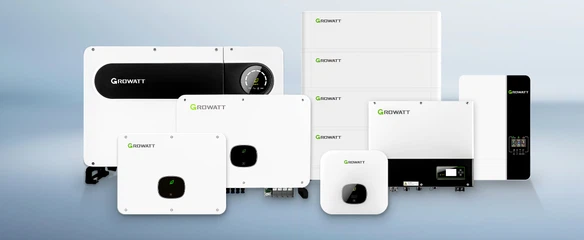
What is Solar Inverter?
An inverter's main function is changing the electricity from direct current to alternating current. Solar panels generate direct current electricity, which can't be used by the grid. An inverter ensures the power you generate is compatible with the grid by switching it to alternating current.
Why Choose Us?
Quality control
Our products have obtained multiple certifications. We regard quality as the life of the enterprise, and comprehensive control of the industrial chain ensures product quality.
Long Warranty
We assure 12 years limited warranty on materials and workmanship, 10 years limited warranty for 90% linear power output, 25 years limited warranty for 80% linear power output warranty.
One-stop Solution
We focus on photovoltaic system design, research and development, production and provide customers with high-quality photovoltaic installation, commissioning.
Quality Services
We provide high-quality services that meet the highest industry standards. We follow best practices in our work processes and adhere to strict quality control measures to ensure that we deliver the best results to our clients.
-
![PV On-Grid String Inverter]()
-
![350kw Three Phase Inverter]() 350kw Three Phase InverterNominal AC Output Power: 350kWread more
350kw Three Phase InverterNominal AC Output Power: 350kWread more
IP Class: IP 66
Display: LED,Buletooth+APP
Cooling Type:Fan Cooling -
![10kw HYBRID SOLAR INVERTER]() 10kw HYBRID SOLAR INVERTERRated Output Power: 4.3-12.3kwread more
10kw HYBRID SOLAR INVERTERRated Output Power: 4.3-12.3kwread more
Rated Voltage:240/280Vd.c.
Protection Degree: IP20
Installation: Wall-Mounted -
![1kw Hybrid Solar Inverter]() 1kw Hybrid Solar InverterRated Output Power: 1-2.3kwread more
1kw Hybrid Solar InverterRated Output Power: 1-2.3kwread more
Rated Input Voltage:180-240Vd.c.
Protection Degree: IP20
Installation: Wall-Mounted -
![Single Phase Hybrid Inverter 6kw]() Single Phase Hybrid Inverter 6kwRated Output Power: 3-6kwread more
Single Phase Hybrid Inverter 6kwRated Output Power: 3-6kwread more
IP Rating:IP65
Dimensions(W×H×D): 708×410×170 mm
Communication: CAN/RS485/Wi-Fi, Optional: 4G/LAN -
![Three Phase Hybrid Inverter 40kW]() Three Phase Hybrid Inverter 40kWRated Output Power: 10-40kwread more
Three Phase Hybrid Inverter 40kWRated Output Power: 10-40kwread more
Rated Input Voltage:600 Vd.c.
Rated output frequency: 50/60Hz
Degree of protection: IP66 -
![Single Phase Solar Inverter 8kw]() Single Phase Solar Inverter 8kwRated Output Power: 3-8kwread more
Single Phase Solar Inverter 8kwRated Output Power: 3-8kwread more
Rated Input Voltage:360Vd.c.
Rated output frequency: 50/60Hz
Degree of protection: IP66 -
![Single Phase Solar Inverter 3KW]() Single Phase Solar Inverter 3KWRated input voltage: 380Vread more
Single Phase Solar Inverter 3KWRated input voltage: 380Vread more
Rated output power:3000-6000W
Weight: < 10 kg
Ingress protection: IP65 -
![350kW Commercial Inverter]() 350kW Commercial InverterRated input voltage: 1160Vread more
350kW Commercial InverterRated input voltage: 1160Vread more
Rated output power:352kW
Weight: < 113 kg
Ingress protection: IP66 -
![Single Phase String Inverter]() Single Phase String InverterRated input voltage: 360Vread more
Single Phase String InverterRated input voltage: 360Vread more
Rated output power:1100-5000W
Weight: ≤7.3kg
Ingress protection: IP65 -
![High Frequency Solar Inverter]() High Frequency Solar InverterSurge Power: 3200-12400Wread more
High Frequency Solar InverterSurge Power: 3200-12400Wread more
AC INPUT Voltage:230VAC±5%
Normal voltage: 12-48VDC
Warranty: 2year -
![100kw Three Phase Inverter]() 100kw Three Phase InverterRated Output Power: 100kwread more
100kw Three Phase InverterRated Output Power: 100kwread more
Rated Input Voltage:625 Vd.c.
Rated output frequency: 50/60Hz
Degree of protection: IP66


Solar Inverter is a critical component of solar power systems, converting DC electricity from solar panels into AC power for use in homes and businesses. These inverters enhance energy efficiency and reliability, ensuring seamless integration of clean solar energy into the electrical grid.
Advantages of Solar Inverter
The main benefits of solar inverter include the following.
-
Solar energy decreases the greenhouse effect as well as abnormal weather change.
-
By using solar products, we can save money by reducing electricity bills
-
The solar inverter is used to change DC to AC and this is a reliable source of energy.
-
These inverters empower small businesses by reducing their energy needs & requirements.
-
These are multifunctional devices as they preprogrammed to alter DC to AC which assists large energy consumers.
-
Easy to set up & more reasonable compared with generators.
-
Maintenance is easy as they work well even with usual maintenance.

Different Types of Solar Inverters
Grid-tied solar inverters
Grid-tied solar inverters are the most prevalent type of solar inverter. They convert dc power from solar panels to ac power compatible with the electrical grid, and send any excess energy generated back to the grid, potentially resulting in a credit on your electricity bill. They do not provide backup power during a grid outage, since they're programmed to automatically shut down for safety reasons when the grid goes down.
Off-grid solar inverters
Off-grid solar inverters are crucial components in self-sustained solar power systems that operate independently without relying on the utility grid. These inverters play a vital role in converting the low-voltage dc electricity generated by solar panels into usable ac power.
During daylight hours, the solar array charges the battery bank. The charge controller regulates and protects the battery bank from overcharging, while a dc disconnect allows for safe maintenance of the solar array. When ac power is needed, the off-grid solar inverter converts the stored dc power from the batteries into the precise amount of ac power required to meet the load demands.
Hybrid solar inverters
Hybrid solar inverters offer the best of both worlds by combining the features of grid-tied and off-grid inverters, making them versatile options. They work with the utility grid as well as a standalone off-grid system, enabling you to use solar energy, store any excess energy in batteries, and even sell any surplus electricity back to the grid. Hybrid inverters are ideal for areas with unreliable grid connections or regions where electricity costs are high. These systems allow for greater control over energy usage and provide backup power during grid outages.
How do Solar Inverters Work?


A solar inverter converts your solar panels variable direct current (DC) output into alternate 120V/240V current (AC). Since your home devices run on AC instead of DC, your solar panels DC output should be converted by the solar inverter.
Solar panels or photovoltaic (PV) cells, are composed of silicon cells or aluminium gallium semiconductor layers, and the sun shines on them. The layers are made up of a junction that connects negative and positive layers.
The semiconductor layers absorb light from the sun and deliver it to the PV cell. This energy bounces electrons around, causing a direct current between the negative and positive layers (DC). After being generated, this energy is either kept in the battery for future use or delivered immediately to a working inverter.
The power to the inverter is given in DC format, however, your home requires AC. The inverter captures the energy and sends it via a transformer, which generates an AC output. In essence, the inverter 'tricks' the transformer into believing the DC is true AC by forcing it to behave like AC – the DC is sent through two or more transistors that turn on and off incredibly quickly, supplying two distinct sides of the transformer.
How to Choose the Right Size Inverter for Your Solar Setup?
To choose the right inverter for your solar panel system, consider the following factors:
Total power consumption: Calculate all your electrical loads and add up their power requirements to determine the minimum power capacity your inverter needs.
01
Consider future expansions: Account for any potential increase in power needs if you plan to add more devices or expand your solar system in the future.
02
Select an inverter size: Choose an inverter that can handle your peak power needs and has a power rating slightly higher to allow for some headroom.
03
Consider efficiency: Look for inverters with high-efficiency ratings to minimize energy losses during conversion.
04
Check for compatibility: Ensure the inverter is compatible with your solar panels and battery system, ensuring optimal performance and efficiency.
05
What Does a Solar Inverter Do?
The solar inverters are an important component in a solar array. It plays a pivotal role in the functioning of the system to providing protection to the system. The inverter functions are described below.
Convert DC to AC power
Most of the equipment in homes and businesses is powered by alternating current (AC). But the power generated by solar panels is in direct current (DC). The basic function of a solar inverter is to convert the DC to AC power usable in homes and businesses.
Maximize power output
Inverters are continuously tracking the output voltage of the solar array to identify the maximum power at which the modules can operate. If shading occurs due to environmental factors or degraded modules, the inverter can identify the wrong peak in the string and reduce the overall energy production of the system.
Interface with the grid
The new smart inverters have advanced from one-way communication with the grid to two-way communication. With the help of advanced software, the smart inverters specific grid-supportive functionalities related to voltage, frequency, communications, and controls.
Report on power production
Solar inverters make it easy to keep track of the power output of their solar energy systems. Some of the modern inverters have hardwired ethernet, bluetooth, or Wi-Fi connectivity that helps solar system owners view error codes, diagnostics, and power production details on their computers or smartphones.
Ensure safe system operation
During the event of an electrical arc caused by material degradation or system aging, inverters are required to shut down. So they are programmed to identify these electrical arcs and can act quickly shut down to protect the system.
Solar Inverter Efficiency
During the inverter's DC to AC electricity conversion, some energy gets lost in the form of heat. Higher quality solar power inverters are more efficient, so they convert more electricity and don't have high losses during this conversion process.


Conversion efficiency varies by brand, but most quality inverters are around 97% to 99% efficient, so the energy loss is relatively minor. That said, shading and other factors can have an impact on energy system efficiency, and your photovoltaic inverter plays a role in minimizing those losses.
Solar Inverter Key Terms to Know
Clipping/scalping
This is the term used to describe the energy output that is lost due to undersizing an inverter.
Any given inverter has a maximum power rating (at the residential level, measured in W or kW). When solar supplies DC power in excess of that inverter's maximum power rating (what the inverter can handle), the resulting power is "clipped."
It's important to consider the solar panel arrays' maximum power output and select an inverter with the correct size, model, and type in order to avoid excessive clipping.
It's normal for the dc system size to be about 1.2x greater than the inverter system's max ac power rating. For example, a 12 kW solar PV array paired with a 10 kW inverter is said to have a DC: Ac ratio — or "inverter load ratio"— of 1.2.
When you into account real-world, site-specific conditions that affect power output, it may make sense to size the solar array a bit larger than the inverter's max power rating, as there may be very few "power-limiting days," or instances of clipping for that system.
Inverter efficiency
Inverter efficiency is a percentage that tells us how much DC power input to an inverter comes out as usable ac power. No inverter is 100% efficient, although some come close in favorable conditions. In the conversion from dc to ac, power is lost in the form of heat.
Maximum power
Maximum power is the highest amount of power allowed to feed into an inverter, which is a function of the inverter's specifications or the maximum power a solar panel can produce. This will occur at the optimal trade-off between voltage and current along a given panel's I-V (current and voltage) curve.
Maximum power point (MPP)
A solar system's maximum power output will vary with conditions, such as how much sunlight it receives, temperature, and other factors. A fixed-tilt, stationary, roof or ground-mounted solar PV system might only produce its maximum rated power during a limited period of the day. Every specific solar cell has its own unique I-V curve, which relates its maximum power output to variations in current (I) and voltage (V).
Maximum power point tracker (MPPT)
A device that periodically tracks characteristics of a given panel, string of panels, or system, and optimizes and varies voltage and amperage accordingly in order to produce maximum power.
Microinverter
A device that converts direct current (DC) produced by a single solar panel into alternating current (AC).
Micro-inverters are commonly connected to and installed at the site of, or behind, each individual solar panel in an array. Most micro-inverter makes are installed in the field, while some come panel-integrated by the manufacturer.
Optimizer
A DC-DC converter, optimizer, or "panel optimizer," is a module-level power electronic device that increases the solar system's energy output by constantly measuring the MPPT of each individual panel.
The panel optimizers relay performance characteristics via a monitoring system to facilitate operations and any necessary maintenance. In essence, optimizers support flexible system designs and arrangements – with multiple panel orientations, tilts, azimuths, and module types in a given string.
Perhaps the most advantageous benefit of using a dc optimizer is panel-level MPPT, or max-power point tracking. The result is increased energy harvest from a panel system, especially when subject to periodic or sweeping shade.
Peak power point
Another term for maximum power point (MPP).
String inverter
The device that converts direct current (DC) electricity produced by groups of solar panels (called strings), into usable alternating current (AC) electricity.
String inverters are considered a "mature"solar technology that has proved effective, safe, and reliable. Residential, 240V AC string inverters usually carry manufacturer's warranties of about 10 years.
Factors to Consider When Choosing a Solar Inverter
Stability of output voltage
Solar cells create electricity held in storage batteries before being converted to 220V or 380V AC by solar inverters in photovoltaic systems. The output voltage of storage batteries, on the other hand, is determined by the charge and discharge of storage batteries themselves. Meanwhile, the voltage output variance should not surpass 10percent of the rated value when the load changes unexpectedly.
Rated output frequency
Since their ideal frequency is 50Hz, loads with motors, such as washing machines and refrigerators, will heat up and degrade system efficiency and service life. As a result, the output current of solar inverters should be a steady number, typically 50Hz, with a fluctuation of less than 1% under normal operating conditions.


Waveform distortion of output voltage
The maximum waveform deformation (or harmonic content) should be set for sine wave inverters. The output voltage's total waveform distortion is one way to express it, which should not exceed 5%. (10 percent is allowed for single-phase output).
Since inverters' high-order harmonic output current will generate eddy current and other additional losses on the inductive load, excessive waveform deformation of inverters will cause severe heating to load components, which is not amenable to the safety of equipment and impacts the operational effectiveness of the process.
Load power factor
Sine wave inverters have a load power factor of 0.7 to 0.9, with a rated value of 0.9, and can handle inductive and capacitive loads. Whenever the load power is constant, and the active management of the inverter is low, the power inverter's required capacity grows.
Electronic noise
In power and electronic devices, noise is produced by transformers, filters, inductors, electromagnetic switches, and fans. Solar inverters should not make more than 80 decibels of noise in regular operation, while small-scale inverters should not make more than 65 decibels.
Rated output current (or rated output capacity)
The rated output current of a solar inverter is defined as the rated output electricity within the given load power factor range. Specific solar inverters' rated output capacity is measured in VA or KVA.
When the output power factor is 1, the product of the rated output volts and the rated output current is referred to as the inverter's rated generating capacity (i.E., the pure resistance load).
Solar inverter efficiency
The efficiency of a solar inverter is defined as the percentage of output power to input power under specific operating conditions. In general, the nominal effectiveness of photovoltaic inverters refers to the efficiency below 80% of pure resistance load.
Mainstream inverters have a notional efficiency of 80 to 95 percent. The efficiency of low-power inverters is above 85%. Not only should high-efficiency inverters be selected in the actual construction of a photovoltaic system, but the load of the photovoltaic system should also operate at near-optimal efficiency through the system's logical arrangement.
Protection measures
An excellent solar inverter must also have comprehensive protective functions or procedures to deal with various strange scenarios during actual operation, ensuring that the inverter and other system components are not destroyed.
Input over-voltage protection
The solar inverter should be safeguarded and displayed with a prompt if the input voltages exceed 130 percent.
Input under-voltage protection
The inverter should be protected, and a prompt should be displayed when the input voltages are less than 85% of the rated volts.
Over-current protection
Inverter overcurrent protection should provide timely functioning when a short-circuit develops or the current surpasses the permitted value to avoid surge destruction. The converter should be able to automatically safeguard itself if the working current exceeds 150 percent of the rated value.
Over-temperature protection
Furthermore, inverters without voltage stabilising features should incorporate over-voltage output protection to safeguard the load from damage.
Solar inverter warranty
Most string inverter technologies have a 10-12-year warranty. An inverter product warranty, also known as a materials warranty, protects the equipment's structural integrity. Your product warranty kicks in if your solar inverter develops a flaw, has a mechanical problem, or shows excessive wear and tear.
Importance of Regular Maintenance: Solar Inverter
Regular maintenance is crucial for ensuring the optimal performance and longevity of your solar inverter. By performing routine checks and cleaning, you can prevent potential issues and maximize energy production. Cleaning the solar inverter regularly helps to remove dust, debris, and any other accumulated dirt that can impede its efficiency. Additionally, checking for loose connections and signs of wear is essential to avoid any potential downtime. Monitoring the performance of your solar inverter through a solar monitoring system allows you to track its energy production and quickly address any deviations or issues.
Troubleshooting and Diagnostics: Solar Inverter
When your solar inverter is not functioning properly, there are a few steps you can take to diagnose the issue. First, check the DC and AC disconnect switches to ensure they are turned on. Then, inspect the solar panels for any signs of shading, debris, or damage that could be affecting performance. Additionally, reviewing the inverter display screen for error messages or unusual readings can provide valuable insight into the problem. If you notice any abnormalities during your visual inspection, it's crucial to address them promptly. Clearing away any obstructions that may be blocking sunlight from reaching the panels and cleaning the surface of the panels can improve overall efficiency. Furthermore, consulting the inverter manual for troubleshooting guidance specific to your model can help you identify and resolve common issues.
In some cases, conducting a system reboot by shutting off the inverter, waiting a few minutes, and then turning it back on can reset any minor glitches. However, if these basic troubleshooting steps do not resolve the issue, it may be necessary to seek assistance from a qualified solar technician.
Cleaning and Inspection Procedures: Solar Inverter
Regular cleaning and inspection of your solar inverter is crucial for maintaining its efficiency and longevity. Start by visually examining the inverter for any signs of physical damage, corrosion, or loose connections. Next, use a soft cloth or brush to gently remove any dust, dirt, or debris from the exterior of the inverter. Take care not to use water or cleaning solutions that could damage the sensitive components.
After cleaning, proceed with a thorough inspection of the cooling system. Check for any blockages in the ventilation openings and ensure that the fan is functioning properly. Additionally, use a multimeter to measure the voltage and current at various points within the inverter to identify any irregularities that may indicate underlying issues. By following these cleaning and inspection procedures.
Our Factory
D.T. MULTI TECH Co.,Ltd., A high-tech enterprise specialized in the field of photovoltaic new energy. Headquartered in the beautiful coastal city of Xiamen, Fujian. Your one-stop solution provider that focuses on photovoltaic system through design, supply, installation, and commissioning with EPC and BOOT.

FAQ
Q: What does a solar inverter do?
A: An inverter is one of the most important pieces of equipment in a solar energy system. It's a device that converts direct current (DC) electricity, which is what a solar panel generates, to alternating current (AC) electricity, which the electrical grid uses.
Q: What is the difference between a solar panel and a solar inverter?
A: Solar panels generate direct current electricity, which can't be used by the grid. An inverter ensures the power you generate is compatible with the grid by switching it to alternating current. Inverters today do a lot more, though. They're the bit of equipment that monitors and reports power generation and usage.
Q: Do you need an inverter with solar?
A: Yes, solar can work without an inverter if dc exclusively powers your load or appliance. An inverter converts DC to AC, allowing us to power our alternating load.
Q: What is the difference between a solar generator and a solar inverter?
A: Generators convert energy into electricity while an inverter can't do that. Inverters take existing power from a battery or some other source in the form of direct current and convert it into alternating current to power your house.
Q: How long do solar inverters last?
A: String solar inverters have a life expectancy of 10-15 years and microinverters can last for 20-25 years. Although they are rated to last for decades, many factors can affect the performance of the inverters: Heat.
Q: How many inverters do I need for solar panels?
A: Microinverters are usually placed under each solar panel, in a ratio of one microinverter for every 1-4 panels.
Q: Can solar inverter power a house?
A: There are many benefits to using solar energy in your home, such as reducing your carbon footprint, saving money on your energy bill, and improving your home's overall energy efficiency. Solar inverters provide the necessary hardware to convert the sun's rays into usable electricity for your home.
Q: Is an inverter necessary for solar?
A: For a solar system to work, an inverter is required. It converts the energy gathered by the panels into a safe current.
Q: Can I use a solar panel without an inverter and battery?
A: Batteries are required for off-grid solar panels to work. Batteries are necessary to store electricity in off-grid solar panels. In the absence of electricity or batteries, the only option is to purchase a grid-connected solar inverter.
Q: Can I use a battery without an inverter?
A: Without an inverter converting a car battery into an outlet is impossible. An inverter, which converts 12V DC (direct current) to 230V AC, would be required (alternating current). Appliances will not run without this electrical gadget.
Q: Do inverters waste power?
A: Inverters lose electricity when their batteries are not used and the unit is turned on. It is subject to change. Depending on the device and design of their standby systems, they can use as little as .02 amps or as much as two amps.
Q: Why do I need a power inverter?
A: When installing a solar power system, power inverters convert solar energy into electricity that can be used to power your vehicle's electronics. This is clean energy that doesn't deplete your car's battery.
Q: Do inverters use a lot of electricity?
A: No, since an inverter consumes about 8-10% more energy than the appliances, it is powering. This is because of the inverter's efficiency.
Q: Can we use electricity directly from a solar panel?
A: Yes, this is possible. Having a solar battery backup can be beneficial in some instances, but it is not required. In some cases, the plus solar battery can help, while in others, rooftop solar panels may be the best option.
Q: How often should you wash your solar panels?
A: As a general guideline, schedule a cleaning at least once every six months, and potentially more frequently if the panels seem to be consistently dirty. One cleaning every six months should suffice if there isn't much of a problem.
Q: Can you use solar panels without electricity?
A: Solar panels will not be able to offer electricity to your home or business during a power outage.
Q: What size inverter do I need for solar panels?
A: It would help match the wattage of your solar panels as a general rule of thumb. You'll need a 3000-watt inverter if your solar panels are 3000 watts. Oversizing however can be efficient. Most systems are at their peak efficiency at around 120% oversized the solar array.
Q: Why do I need a power inverter?
A: When installing a solar power system, power inverters convert solar energy into electricity that can be used to power your vehicle's electronics. This is clean energy that doesn't deplete your car's battery.
Q: Do inverters use a lot of electricity?
A: No, since an inverter consumes about 8-10% more energy than the appliances, it is powering. This is because of the inverter's efficiency.
Q: Can we use electricity directly from a solar panel?
A: Yes, this is possible. Having a solar battery backup can be beneficial in some instances, but it is not required. In some cases, the plus solar battery can help, while in others, rooftop solar panels may be the best option.
Xiamen D.T. Multi Tech Co., Ltd. is one of the most professional solar inverter manufacturers and suppliers in China, we're featured by quality products and good service. Please rest assured to wholesale cheap solar inverter from our factory.