

Solar Mounting

What is Solar Mounting?
Solar panel mounting structures are used to fixing solar panels on ground or roofs. Photovoltaic mounting systems are increasing solar panel stability and efficiency. Aluminum, stainless steel and galvalume is generally materials used in solar panel mounting structure.
Why Choose Us?
Quality control
Our products have obtained multiple certifications. We regard quality as the life of the enterprise, and comprehensive control of the industrial chain ensures product quality.
Long Warranty
We assure 12 years limited warranty on materials and workmanship, 10 years limited warranty for 90% linear power output, 25 years limited warranty for 80% linear power output warranty.
One-stop Solution
We focus on photovoltaic system design, research and development, production and provide customers with high-quality photovoltaic installation, commissioning.
Quality Services
We provide high-quality services that meet the highest industry standards. We follow best practices in our work processes and adhere to strict quality control measures to ensure that we deliver the best results to our clients.
-
![Solar Panel Bird Guard]() Solar Panel Bird GuardIntroducing the Solar Panel Bird Guard, a groundbreaking solution designed to safeguard your valuable solar panels from avian damage.read more
Solar Panel Bird GuardIntroducing the Solar Panel Bird Guard, a groundbreaking solution designed to safeguard your valuable solar panels from avian damage.read more -
![Plug And Play Solar System For Apartments]() Plug And Play Solar System For ApartmentsProduct name: balcony solar kitread more
Plug And Play Solar System For ApartmentsProduct name: balcony solar kitread more
Installation Site: Balcony, Garden, Railing
Enclosure Environmental Rating: IP67
Rated Output Power: 600VA/ 799VA -
![Hanger Bolts For Solar Panels]() Hanger Bolts For Solar PanelsProduct name: hanger boltread more
Hanger Bolts For Solar PanelsProduct name: hanger boltread more
Material: SUS304/AL6005-t5
Surface Treatment: Anodized -
![Solar Panel Pest Guards]() Solar Panel Pest GuardsProduct name: Solar Bird Meshread more
Solar Panel Pest GuardsProduct name: Solar Bird Meshread more
Application: Roof Solar Power Plant
Material: SUS304/Steel -
![Solar Panel Mesh Guard]() Solar Panel Mesh GuardProduct name: Solar Bird Meshread more
Solar Panel Mesh GuardProduct name: Solar Bird Meshread more
Application: Roof Solar Power Plant
Material: SUS304/Steel -
![Solar Bird Guard]() Solar Bird GuardProduct name: Solar panel bird net fasten partsread more
Solar Bird GuardProduct name: Solar panel bird net fasten partsread more
Application: Roof Solar Power Plant
Material: SUS304/Steel -
![Solar Rail Mount Clamps]() Solar Rail Mount ClampsProduct name: Solar Mounting Rail Fix Clampread more
Solar Rail Mount ClampsProduct name: Solar Mounting Rail Fix Clampread more
Application: Installation Site Rooftop
Material: Aluminum 6005-T5 & Stainless Steel 304 -
![Triangle Mounting Bracket]() Triangle Mounting BracketProduct name: Triangle Adjustable Mountingread more
Triangle Mounting BracketProduct name: Triangle Adjustable Mountingread more
Application: Commercial, RV, Boat, Caravan etc.
Material: Aluminum -
![Industrial Walkway Grating]() Industrial Walkway GratingProduct name: Walkwayread more
Industrial Walkway GratingProduct name: Walkwayread more
Application: Solar Roof, Drain, Flooring, Stair, Platform
Material: Carbon steel, stainless steel -
![Galvanized Walkway Grating]() Galvanized Walkway GratingProduct name: Walkwayread more
Galvanized Walkway GratingProduct name: Walkwayread more
Application: Solar Roof, Drain, Flooring, Stair, Platform
Material: Carbon steel, stainless steel -
![Walkway Solar Roof]() Walkway Solar RoofProduct name: Walkwayread more
Walkway Solar RoofProduct name: Walkwayread more
Application: Solar Roof, Drain, Flooring, Stair, Platform
Material: Carbon steel, stainless steel -
![Solar Roof Rails]() Solar Roof RailsProduct name: Solar Roof Mounting Railread more
Solar Roof RailsProduct name: Solar Roof Mounting Railread more
Application: Solar power plant
Material: Alu6005/T5


Solar mounting solutions encompass a range of products designed to securely install solar panels on various surfaces, optimizing their exposure to sunlight. This includes racks, rails, and brackets, ensuring stability and efficiency in solar energy generation.
Advantages of solar Mounting
The main benefits of solar mounting include the following:
-
Reduced energy costs: Installing solar panels means that electricity will be generated from a renewable source, leading to a reduction in energy costs.
-
Environmentally friendly: Solar mounting significantly reduces greenhouse gas emissions, leading to a healthier environment.
-
Long-lasting: Most solar mounting systems are guaranteed to last for a minimum of 25 years, meaning that once installed, homeowners will have an efficient energy source for decades.
-
Easy maintenance: Solar mounting systems require little to no maintenance, which means fewer expenses and less hassle for homeowners.
-
Energy independence: Solar mounting enables homeowners to generate their electricity, leading to greater energy independence and reducing dependence on the grid.
-
Diverse installation locations: Solar mounting systems can be installed on roofs, walls, or even as standalone structures, making them suitable for a wide range of properties.

What are 5 Types of Solar Mounting Structure?
To improve the production and efficiency of solar panels, the proper mounting structures must be used. There are five different types of solar panel mounting structures:
Mounted roof racks
These racks aid in keeping wires from going too far between the solar panels and the inverter. Roof penetrations are required for the installed racks, which helps to prevent roof leaks. As a result, always maintain a well-sealed roof. Roof mounts necessitate a vast area for panel installation. These solar panels may be fixed or changed, and solar trackers can be attached.
01
Ground-mounted racks
Ground-mounted racks are solar structures that are used to place solar panels on your property or anywhere in your home. These are adjustable and can be angled up or down to capture the most solar energy at various times of the day. These mounting devices are used to secure areas that have sturdy and clean environments.
02
Top of pole mounted racks
As the name implies, these racks are mounted on poles. Top-pole allows the solar panel to be mounted on the pole's top. Top-pole mounted racks allow the mounting poles to be settled into the ground and fitted with concrete before the solar modules are attached at the top of the poles.
03
Side-of-pole mounted racks
The solar panels are mounted on the pole's side. They are made up of a small number of modules that are utilized to make solar panels. These are specially intended for remote lighting systems and are delivered to your location with poles on which they may be readily attached.
04
Tracking-system mounted
These mounts are utilized for all sorts of solar tracking systems, pumping solar water and permitting maximum sun radiation for energy production. Tracking systems are classified into two types: One axis and two axes. One axis tracks the sun's journey from east to west, while the two axes track the sun's movement on a daily basis. The solar tracker inherits the automatic system, which aids in tracking the position of the sun throughout the day for optimal solar energy.
05
What are Solar Panel Mounting Components?
A solar mounting structure is made up of numerous components that can be used to secure the panel. These solar panel mounting components are as follows:
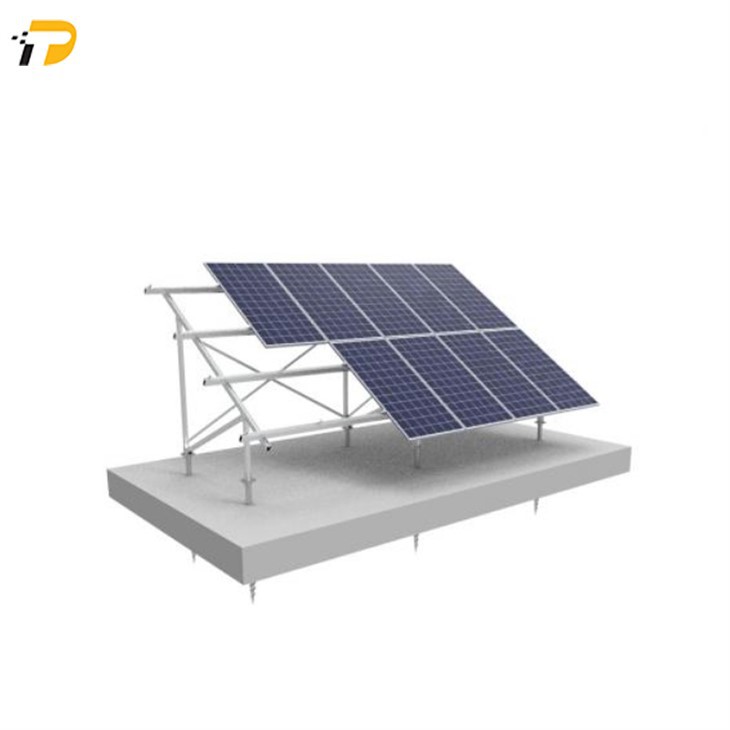
Brackets for mounting solar panel
Solar panel mounting brackets are one of the most common components found in solar mounting systems. These heavy-duty components are often constructed of stainless steel or aluminum. Similarly, to other mounting and racking accessories, these solar panel mounting brackets must adhere to strict industry regulations and perform as expected.

Clamps for mounting solar panels
Rooftop mounting clamps are a component of the mounting structure. These clamps are attached to the joints of a solar panel and are held in place using stainless steel set screws. Using solar rooftop design software, you can easily design your solar mounting framework.

Strut channel for solar panel mounting
Strut channels, along with rails, clamps, and other fittings, are used to aid the cantilever arm in the framing of solar panel mounting structures. These channels are the connectivity systems that keep the two additives from attacking each other and carry the weight between them.

Screw for mounting solar panel
The solar panel mounting screw is an essential component of the solar installation framework. The greater the number of screws, the greater the efficiency of the mounting. The array's angle and the position of the mounting screws control how much sunlight is captured and lost by the panels and their edges.
What is Solar Mounting Structure Material?
The principal solar mounting structure material utilized in the solar mounting structure are stainless steel, aluminum, and galvalume. The material used to mount structures is determined by the plant's location and life cycle.
Stainless steel has inherent durability and stability, making it excellent for creating mounting structures. This aids in keeping solar panels in place during inclement weather.
(CFS) or light gauge steel has shown to be an excellent choice for solar installation systems. It is lightweight and adaptable to all terrains, including remote regions and distinctive roof designs. While CFS has typically been utilized in building construction, the material's and process's adaptability allow it to be used for smaller, modular structures as well, broadening its application to solar mounting structures.
Despite its small weight, CFS has a high tensile strength. This allows mounting structures to be framed on-site as well. The frames can be fabricated and assembled in a factory or assembled on-site to allow for minor alterations to provide a well-fitting mounting structure. In terms of thickness, design, and length, the material is quite adaptable. It is also less expensive and can be manufactured and installed with better precision.
(HDG) is used to prevent corrosion and extend the life of components that are directly exposed to adverse weather conditions. For parts that are not exposed to mechanical wear and tear, such as mounting structures, a coating thickness of 70 microns is usually sufficient. However, because HDG is generally a semi-automated process, it has its own limits in terms of quality control. Meanwhile, solar mounting frames are made of pre-galvanized steel. It is commonly used for items that are not subjected to corrosive substances or water.
Aluminum extrusions are commonly employed as solar mounting systems. The extrusion method enables design flexibility as well as optimal rigidity and strength. The material is lightweight, low in density, and easily transportable to remote locations. Furthermore, the aluminum utilized is extremely robust, nearly maintenance-free, and recyclable.
Aluminium's essential qualities in solar mounting structures are high strength, formability, electrical and thermal conductivity, corrosion resistance, and strong heat and light reflection. Furthermore, it is simple to manufacture and recycle. Given the weight constraints on rooftop solar plants, aluminum mounting structures are also perfect. It is appropriate for mounting solar panels on carports and other platforms.
Aluminum extrusions can be customized on-site and take less time to install. They do not require a lot of labor. Aluminium's light weight facilitates transporting. It also keeps transportation costs low. Aluminium is naturally resistant to oxidation and other corrosive effects of the environment. These components can be designed for quick snap-together assembly with tight connections.
Galvalume has also grown in popularity in recent years. It is composed of 55% aluminum, 43.5 percent zinc, and 1.5 percent silicon.
What are the Most Important Components of a Solar Mounting?
Roof attachments
The roof attachments are the fasteners that will be drilled into your roof in order to secure the racking system in place. The holes these drills create will be surrounded by ‘flashing', which is a plastic or metal shield that is inserted between shingles to prevent water from getting into the hole. However, roof attachments differ for each roof type.
Module clamps
The module clamps attach the drilled-in roof attachments to the mounting rails. There are a few different module clamp types for each angle and corner of the solar panel.During daylight hours, the solar array charges the battery bank. The charge controller regulates and protects the battery bank from overcharging, while a dc disconnect allows for safe maintenance of the solar array. When ac power is needed, the off-grid solar inverter converts the stored dc power from the batteries into the precise amount of ac power required to meet the load demands.
Mounting rails
After drilling into the roof, the roof attachments are then connected to mounting rails via module clamps that will then support the solar panels.
What are the Advantages of Aluminum Solar Mounting?


The reason why aluminum alloy is more widely used in various aspects of life is because it has many advantages.
Lightweight: Compared to other iron supports, supports made of aluminum alloy are lighter due to the low density of aluminum.
Corrosion resistance: Those who have knowledge of chemistry may know that aluminum in the air can react with oxygen to form a dense aluminum oxide film, which protects aluminum from further reactions.
Voltage balancing: In photovoltaic support systems, weak currents may be generated due to various reasons. Aluminum supports have good conductivity and can help balance the current, preventing accidents.
Easy to manufacture: Due to its low density, aluminum profiles are light and easy to process into required specifications using techniques such as sawing, drilling, punching, and folding. Therefore, aluminum alloy supports are relatively easy to manufacture, which is one of the reasons for their wide application.
Cold resistance: Supports made of aluminum alloy are highly resistant to low temperatures because of the presence of aluminum metal. Unlike some steel supports, they do not lose hardness during the cooling process due to their inability to withstand low temperatures.
Environmentally friendly and easily recyclable: Aluminum supports do not cause pollution when discarded and are easy to recycle.
The Advantages of Solar Energy: Why Solar's Worth It for Most Homeowners
Solar drastically reduces, or even eliminates your electric bills
The top benefit of solar panels is pretty straightforward. When you install solar panels at your home, you generate your own electricity, become less reliant on your electric utility, and reduce your monthly electricity bill. A solar panel system typically has a 25- to 35-year lifespan, meaning you can cut your electricity costs for decades by going solar.
Solar often increases your home value
Many homeowners are interested in solar panels but don't understand how they will impact their homes. Recent studies indicate that installing a solar system can increase your home's value by about 4%. Even if you're not in your forever home, you could earn back your solar panel investment and then some when you sell your house. Whether you've been there for years or just moved into a new home, installing solar is a good investment for most homeowners.
Solar reduces carbon emissions
When you go solar, you lower your contribution to climate change. Solar is a renewable source of clean energy that helps reduce carbon dioxide and other greenhouse gas emissions. Unlike traditional fossil fuels like coal, oil, and natural gas, solar energy doesn't directly release pollutants into the atmosphere and water supply. Even compared to nuclear energy, solar comes out on top in terms of environmental impact.
Solar protects against rising energy costs
As long as you buy, rather than lease, your solar panel system, you'll lock in electricity costs for the next 25+ years. Once you recover the initial cost of your system in bill savings, you'll generate your own electricity for free.
You can sometimes earn money with solar
In some states, solar panels can turn a profit in addition to generating bill savings that pay off the cost of the system. If you live in a state where this incentive applies, you can expect both immediate and long-term returns from your solar investment.
Solar works well in most environments
Some alternative energy, like wind and hydroelectric power, need wide open spaces with ample wind changes and large water sources. Solar is a source of energy that can work in almost every environment. While output is lower on cloudy days or in climates without as much regular sun exposure, solar panels still make sense in most climates.
Solar typically requires very little maintenance
As long as you choose a quality solar company to properly install your solar panels, they should require very little maintenance compared to other forms of energy production. With no moving parts, your panels might only need an occasional cleaning after snow or inclement weather.
Finding the Right Tilt: A Solar Mounting
On a rooftop or ground-mounted frame that is not ideally angled for getting the most sun exposure possible, tilt legs can adjust the panels so that they are slanted at ideal angles to the sun, both horizontally and vertically. The tilt angle is the vertical angle while the azimuth angle is the horizontal angle in relation to the equator. Setting the title angle is easy: Set it to your latitude. Finding the azimuth angle is somewhat more difficult. In the northern hemisphere, panels should (almost always) face true south rather than the magnetic south, which can vary depending on earth's magnetic field.
Key Functions of Solar Mounting
For great power production and solar panel functionality, the installation of panels should be perfect. The solar mounting structures perform a key role and provide a stable base for solar systems for homes. The key functions of solar mounting frameworks are as follows:
Optimal panel orientation
Solar mounting systems ensure that panels are oriented and tilted to receive the most amount of sunlight possible. This function is crucial for maximizing energy output and raising your solar system's overall efficiency.
01
Durability and stability
Solar mounting structures provide the necessary support to withstand environmental factors, such as wind, rain, and snow. Their durability and stability are crucial for the long-term performance and reliability of your solar panels.
02
Easy maintenance
With the support of solar mounting structures, it's easy to maintain and clean the solar panels. It allows easy access to the panels and components and simplifies cleaning, inspection, and repairs, extending the system's lifespan and reducing downtime.
03
Space utilization
Solar mounting frameworks are designed for efficient space utilization for both residential and commercial spaces. Solar mounting structures allow for the strategic placement of panels, maximizing energy production within the available area while minimizing land or rooftop usage.
04
What Maintenance Is Required for a Solar Mounting?
Regular maintenance for a solar mounting typically involves inspecting and cleaning the panels, checking for any loose or damaged components, and ensuring proper alignment and stability. Additionally, it is important to monitor the system's performance and periodically assess the integrity of the mounting structure to ensure optimal functionality and longevity.
Regular maintenance for a solar mounting typically includes inspecting the system for any physical damage, ensuring all components are securely fastened, and cleaning the solar panels to remove any dirt or debris that may affect their performance. Additionally, it is important to regularly check the system's electrical connections and monitor its overall performance to identify any potential issues or inefficiencies.
Can a Solar Mounting Be Used with Solar Powered Off-Grid Systems?
A solar mounting can be used with solar-powered off-grid systems. The purpose of a solar mounting system is to securely hold the solar panels in place and optimize their angle towards the sun. This is equally important for off-grid systems as it is for grid-tied systems. The mounting system ensures that the solar panels receive maximum sunlight exposure, thereby maximizing the energy generation and efficiency of the off-grid system. A solar mounting can be used with solar-powered off-grid systems. The mounting system ensures proper installation and secure placement of the solar panels, allowing them to efficiently capture sunlight and convert it into usable energy for off-grid applications.
Our Factory
D.T. MULTI TECH Co.,Ltd., A high-tech enterprise specialized in the field of photovoltaic new energy. Headquartered in the beautiful coastal city of Xiamen, Fujian. Your one-stop solution provider that focuses on photovoltaic system through design, supply, installation, and commissioning with EPC and BOOT.

FAQ
Q: Do solar panels need to be mounted?
Q: What are the three common ways of mounting solar panels?
Q: Are solar panels worth it for bird proofing?
Q: What are the three common ways of mounting solar panels?
Q: Is it beneficial to install solar panels?
Q: What is mounting system for solar panels?
Q: Can I install solar panels without mounting accessories?
Q: Are there any specific requirements for using solar mounting accessories?
Q: Can I use different types of mounting accessories together?
Q: How do solar tracking systems work?
Q: Are solar mounting accessories compatible with different panel sizes?
Q: Which is not recommended for solar PV mounting structure?
Q: Is it cheaper to ground mount solar panels?
Q: How long do solar panels last?
Q: Do solar panels work at night?
Q: Is ground mounted solar more expensive?
Q: Is it better to oversize solar system?
Q: How do you maintain solar installation?
Q: What maintenance is needed on solar panels?
Q: How do you maintain a roof with solar panels?
As one of the most professional solar mounting manufacturers and suppliers, we're featured by quality products and good service. Please rest assured to wholesale cheap solar mounting from our factory.
Solar Balcony Mounting, Solar Tile Roof Mounting, Solar Glazed Tile Roof Mounting