


Use Solar Power as the Primary Energy Source for EV Charging
As electric vehicle adoption continues to grow, charging station operators and commercial property owners face increasing electricity demand and operating costs. Integrating solar photovoltaic (PV) systems with EV charging infrastructure offers an effective way to reduce dependence on grid electricity while improving long-term energy efficiency.
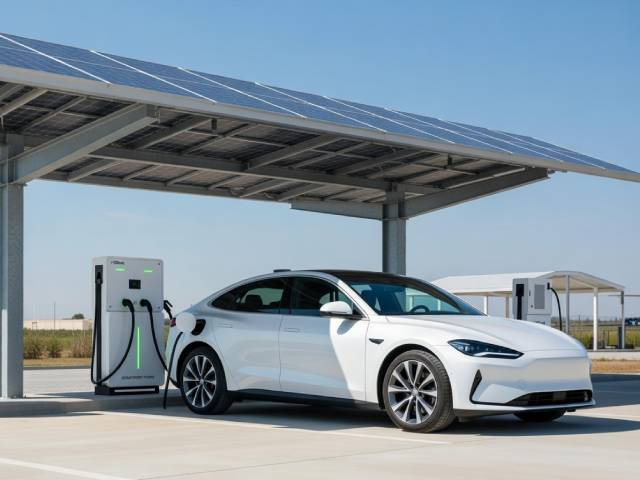
A solar EV charging system uses solar panels to generate electricity and supply power directly to EV chargers. During periods of sufficient sunlight, the generated solar energy can be prioritized for vehicle charging, reducing the amount of electricity drawn from the utility grid. The system can operate in parallel with the grid, allowing grid electricity to supplement solar generation when charging demand exceeds available PV output.
For commercial applications, solar carports provide an additional advantage by utilizing parking areas to install photovoltaic modules. This approach combines vehicle protection, renewable energy generation, and EV charging infrastructure within one integrated installation.
Integrate Battery Energy Storage to Maximize Solar Energy Utilization
Solar generation and EV charging demand do not always occur at the same time. For example, a commercial charging station may experience high charging demand in the evening, when solar generation has already declined. Without energy storage, excess solar electricity generated during the day may be exported to the grid rather than used for later charging.
Integrating a battery energy storage system (BESS) helps address this mismatch. Excess solar electricity can be stored during periods of high generation and discharged when solar output is insufficient or charging demand increases. This allows more locally generated renewable energy to be used for EV charging and can further reduce grid electricity consumption.
The battery capacity should be selected according to daily charging demand, PV generation, charging schedules, and the required backup duration. A properly sized solar battery storage system can improve energy utilization without unnecessary investment in oversized equipment.
Optimize System Configuration and Energy Management
An intelligent energy management system (EMS) can monitor solar generation, battery state of charge, grid power, and EV charging demand in real time. Based on available energy, it can prioritize solar power, manage battery charging and discharging, and adjust EV charging loads. Dynamic load management is particularly useful for commercial charging facilities with multiple charging points and limited grid capacity.
For businesses planning to develop solar-powered EV charging infrastructure, a well-designed system can lower grid electricity purchases, improve the utilization of renewable energy, and support more predictable operating costs. Working with an experienced solar solution supplier helps ensure that the PV system, energy storage, and EV charging equipment are properly matched to the project's actual requirements.