


Installing a solar carport mounting system in a commercial parking lot is one of the most practical and high-return investments for modern businesses, logistics parks, and public facilities. Commercial parking lots provide vast, unshaded ground space that is perfect for capturing solar energy without occupying additional valuable land.
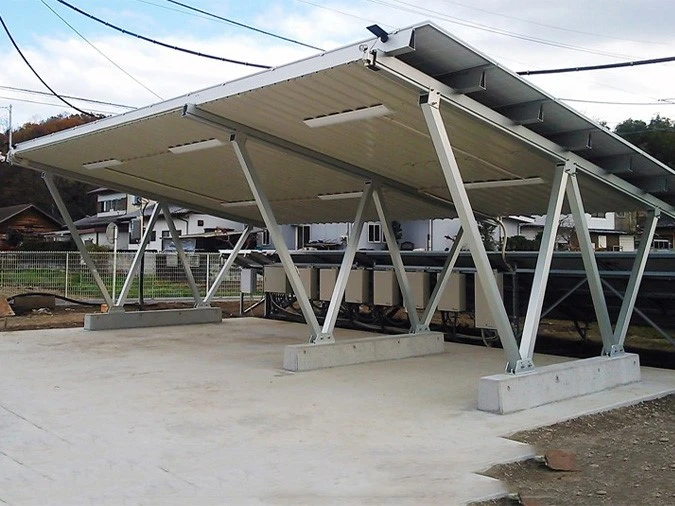
Unlike rooftop solar panels, which are often limited by roof age, structural load capacity, or awkward orientations, solar carports offer a flexible alternative. They convert open asphalt into a dual-purpose asset: providing reliable shade and weather protection for parked vehicles while continuously generating clean, cost-effective electricity.
Key Engineering Considerations for Procurement
When buying a commercial carport solar racking structure, engineering safety and long-term durability are the most critical factors. A reliable structural frame must be constructed from high-strength galvanized steel or heavy-duty aluminum alloys to withstand extreme local wind pressure, heavy snow loads, and seismic activities over its 25-year lifespan.
Additionally, buyers must evaluate column clearance, foundation designs, and integrated water management. High clearance is essential for smooth vehicle maneuvering, while specialized concrete piers or helical piles ensure stability. Modern designs also incorporate waterproof channels and drainage systems to prevent rainwater from leaking between solar panels onto parked cars.
Integrating Carports with BESS and EV Charging
As commercial energy demands evolve, pairing solar carports with EV charging stations and battery storage systems creates a self-sustaining microgrid. Power generated during peak sunny hours can directly supply EV chargers for employees and clients or be stored in lithium batteries to avoid expensive peak-hour grid tariffs.