


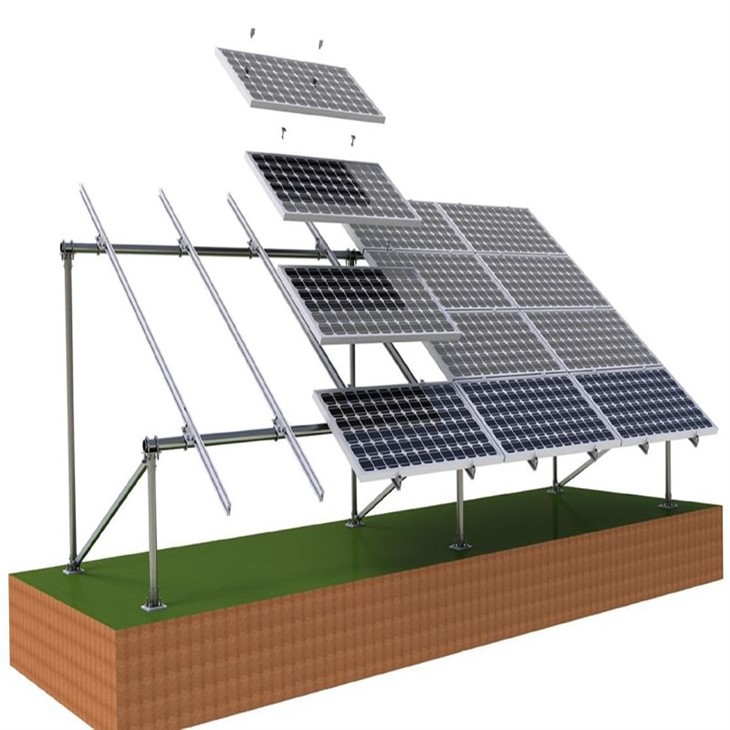
Xiamen D.T. Multi Tech Co., Ltd. is one of the most reliable manufacturers and suppliers of off-grid solar power system in China. With abundant experience, we warmly welcome you to wholesale cheap off-grid solar power system from our factory. If you have any enquiry about cooperation, please feel free to email us.
What is Off-Grid Solar Power System?
The off-grid solar power system is a solar setup that comprises a solar battery, inverters, and panels. With an efficient power backup, it is possible to have a smooth electricity connection in a remote location. There is no need to depend on the utility grid.
Why Choose Us?
Quality control
Our products have obtained multiple certifications. We regard quality as the life of the enterprise, and comprehensive control of the industrial chain ensures product quality.
Long Warranty
We assure 12 years limited warranty on materials and workmanship, 10 years limited warranty for 90% linear power output, 25 years limited warranty for 80% linear power output warranty.
One-stop Solution
We focus on photovoltaic system design, research and development, production and provide customers with high-quality photovoltaic installation, commissioning.
Quality Services
We provide high-quality services that meet the highest industry standards. We follow best practices in our work processes and adhere to strict quality control measures to ensure that we deliver the best results to our clients.


Advantages of Off-Grid Solar Systems
If on an off-grid system, you are 100% self-sustaining your energy use as you are not connected in any way to your local grid's power system or utility company.
The cost of your energy is predictable, as you can amortize the cost of purchase and installation over the lifetime of the system. A good warranty can mean that without unexpected future costs, the return on investment can be calculated. When you compare this to the often high and fluctuating commercial energy costs, it is an attractive proposition.
These systems are good in terms of expandability as your energy needs change over time.
They help prompt you to make efficient use of your electricity, which is good for the environment.
Why Install Off-Grid Solar Power Systems?
Battery backup
One of the most prominent advantages that you can gain from off-grid solar power systems is 6-48 hours of battery backup per use. Moreover, you can the battery anytime you want as it stores the energy converted.
Quick payback
While installing off-grid solar power systems is expensive, you will get a quick payback. You can expect payback for the total charges within 5-7 years. After that, you do not have to worry about paying the outrageous and ever-increasing monthly power bills.
Easy to install
The off-grid solar power systems are easy to set up. You will need to ensure that the solar panels face the sun in order to get maximum sunlight for conversion to electricity.
Notes in the Process of Using Solar Power System
In the process of using the solar power system, investors should note the following to ensure the performance and longevity of the system.


System inspection and maintenance cycle
This is extremely important work and should be noticed first. There are 5 timelines that investors need to remember to always ensure on time and the system maintenance and repair process:
● Daily/weekly/monthly
● Less than 3 months
● Quarterly (once every 3 months)
● Every year
● Every 5 years
Common errors during use
In the process of using a solar power system, there are mistakes that investors need to avoid so that the system can operate at the highest efficiency:
● Failure to install the solar panel system in the wrong direction of the sun and other objects casting shadows on the panels.
● Failure of care and maintenance not on time and according to the correct procedure.
● Errors in the quality of equipment in the solar system.
Possible problems and dangers from the system
During use, there will also be times when the solar power system will have problems, even endangering the system and users:
● Internal decomposition and corrosion.
● Electrical problems.
● DC error.
● AC error.
● Problems related to panels.
● Roof problems.
● Fire incident.
Fix minor and common problems
For major incidents and dangers, we cannot handle it ourselves. But with the following small and common problems, we can completely fix them by ourselves:
● Problems in the installation of the battery system.
● DC/AC current converter (inverter) problem.
● Problems in transmission.
● The inverter does not restart after a grid fault.
● The heat emitted is too hot.
The Three Main Types of Solar Power Systems
An off-grid system is not connected to the electricity grid and, therefore, requires battery storage. Off-grid solar systems must be designed appropriately to generate enough power throughout the year and have enough battery capacity to meet the home's requirements, even in the depths of winter when there is generally much less sunlight.
The high cost of batteries and off-grid inverters means off-grid systems are much more expensive than on-grid systems, and so are usually only needed in more remote areas that are far from the electricity grid. However, battery costs are dropping, so there is a growing market for off-grid solar battery systems, even in cities and towns.
On-grid or grid-connected solar systems are the most common system used by homes and businesses. These systems use either solar inverters or microinverters and are connected to the public electricity grid. Depending on the type of metering used, the solar power you generate is typically used to power your home. Any excess solar power you generate is exported to the electricity grid, and you usually get paid a feed-in-tariff (FIT) or credits for the energy you export to the grid.
Unlike most hybrid or battery systems, on-grid solar systems cannot function or generate electricity during a blackout for safety reasons. Since blackouts usually occur when the electricity grid is damaged. If the solar inverter were still feeding electricity into a damaged grid, it would risk the safety of the people repairing the fault/s in the network. Most hybrid solar systems with battery storage can automatically isolate from the grid (known as islanding) and continue to supply some power during a blackout.
Modern hybrid systems combine solar and battery storage in one and are now available in many different forms and configurations. Due to the decreasing cost of battery storage, systems already connected to the electricity grid can start taking advantage of battery storage. This means being able to store solar energy that is generated during the day and using it at night.
The Differences Between Off-Grid and On-Grid Solar Energy

Your access to electricity
Electricity access with off-grid solar
What is meant by off-grid solar systems? With an off-grid solar system, you're completely reliant on the sun and energy stored in batteries to power your home or business.
If you opt for a solar system that is not tied to the electric grid and you do not have a generator, you will only have electricity at two points:
● When the sun is shining and your solar system is producing electricity.
● When you're pulling electricity previously generated by your solar system from a solar storage device, like batteries.
If you do not have batteries or a means to store your energy, you will have less or no electricity when it's cloudy, and you will not have electricity at night.
With an off-grid system, you will not have access to extra electricity if you need it. What you are producing and what you have stored is all that's there to power your equipment.
Electricity access with on-grid solar
If you decide to install an on-grid solar system, you will always have access to electricity (unless the grid goes down), whether or not your solar system is producing or if you have batteries.
If your system is not producing any electricity or not producing enough electricity to power the devices, lights, machines, etc. That you're using, you can pull energy from the utility grid to supplement it. This ensures you always have enough electricity for what you need.
What happens to excess production
Excess production with off-grid solar
Depending on the size of the system you install, how much electricity you use, and when you use that electricity, there will likely be times when your system is producing more electricity than you're using. What happens to this excess energy depends on the equipment you install.
While having extra batteries offers peace of mind and can provide a bank of stored electricity just in case this happens, they're also expensive. Purchasing more batteries than you need may be cost-prohibitive, depending on your budget.
Excess production with on-grid solar
Just like off-grid solar systems, many who choose to install an on-grid solar system want to cover 100% or nearly 100% of their energy usage. This can be achieved with on-grid systems as well.
Depending on the time of day you use electricity, your solar system can produce excess energy. Instead of sending it to batteries as you would in an off-grid system, you can send it to the grid and you will be compensated for that electricity.


What happens when the grid goes down
Power outages with off-grid systems
Your solar system is working independently from the power grid. If there's a bad storm or event that knocks out the power, your solar system can continue operating. You won't notice changes in your service or access to electricity.
Power outages with grid-tied systems
By connecting to the grid, you get access to electricity whenever you need it. However, you're also subject to some rules. If you have a grid-tied solar system and the grid goes down, you will not have electricity, unless you opt for a grid-tied solar system with battery backup.
How you're billed for electricity
Electricity bills with an off-grid system
If your PV system is not tied to a grid, you won't receive an electric bill at all. However, even with no electric bill, off-grid systems are often more expensive because of the additional equipment like batteries that are needed to make it viable.
Electricity bills with a grid-tied system
If you opt for a grid-tied system, you could still see a few minimal charges on your electricity bill, even if your solar system provides 100% of your electricity.
If your peak demand period is during the day, you may be able to reduce it with solar, as energy produced by your system will compensate for some of the energy you use from the grid. If you pay very high demand charges, you may also want to look into peak demand shaving with solar and batteries.

How to Use Solar Panels During a Power Outage?
There are two main ways you can still have electricity when the lights go out with solar energy: Installing an off-grid solar system or installing a method of energy storage, such as batteries.

Off-grid solar systems
Off-grid solar requires enough batteries to ensure you have enough electricity stored to get through the nighttime and cloudy days. This often makes it much more expensive than grid-tied solar systems. Off-grid solar is rarely a wise investment for most homes and businesses. Additionally, you won't have the option to draw electricity from the grid in case your solar system isn't generating enough electricity and the energy you've stored has run out.Downed powerline
However, it does give you complete energy independence, meaning you can use your solar system when the grid goes down. Off-grid solar is a good option for buildings in remote areas where grid-tied electricity isn't available. An off-grid system may be worthwhile if you have a very remote cabin.
Battery-backed solar systems
A grid-tied system is often the better option for those looking to save money with solar panels. You can also still get backup power when the grid is down if you install an energy storage system. Because you don't need as many batteries as an off-grid system, it likely won't be as expensive.
Installing one or a couple of solar batteries will allow you to store unused power generated by your solar system. You'll then be able to draw on that power without putting utility workers in danger in the event that the electricity grid goes down.

● The off-grid solar power system has been gaining popularity in recent years for the residential sector as it is self-sustaining. Although installing off-grid systems and associated parts is relatively expensive, the consumer becomes more self-reliant and is unaffected by power shortages due to grid failures and shutdowns.
● As of 2021, the global off-grid installed capacity was at 5.51 GW compared to 5.13 GW in 2020, registering a growth rate of almost 7.5%. This growth rate is expected to increase during the forecasted period.
● Moreover, the off-grid solar power system provides power solutions to remote areas where grid connectivity is a major restraint in the region's electrification. Mainly end-users from residential sectors are present in those areas. Off-grid solar power systems can facilitate independent and sustainable electricity generation.
● During the forecast period, the demand for off-grid solar systems is expected to increase on account of decreasing solar PV costs, supportive government policies for residential solar PV, programs and incentives, and targets set by various governments for solar energy.
● The cost reductions are driven by continuous technological improvements, including higher solar PV module efficiencies. The industrialization of these highly modular technologies has yielded impressive benefits, from economies of scale and greater competition to improved manufacturing processes and competitive supply chains.
Technology Insights: Off-Grid Solar Power System
Based on technology, the off-grid solar power system PV panels market has segmented into thin-film, crystalline silicon, and others. In terms of revenue, thin-film accounted for the largest share of 40.43% in the global off-grid solar PV panels market in 2021, owing to its narrow design, strong durability, and manufacturing from flexible & lightweight materials. Due to the extremely thin layers of the film on glass, stainless steel, or a flexible substrate, these are widely known as thin films. The thickness of the film is required to be less than one micron. These cells are combined into a module and laminated to protect them from damage and tampering. Crystalline silicon segment is projected to witness substantial growth during the forecast period owing to the extended lifecycle of the panels, low weight volume ratio, and low-cost manufacturing of silicon semiconductors. Crystalline silicon is witnessing high demand, outperforming production capacities, thus driving up the prices.
Steps in Installing an Off-Grid Solar Power System
Although designing and installing an off-grid solar power system isn't terribly difficult, it has noticeable complexity and involves a more or less fixed sequence of steps.
Load calculation and system sizing
The first step that comes before installing any of the components is figuring out the specifications and the quantity of the components you will require – based on how much energy and continuous power you will be using. To begin with, you need to list all your electrical appliances, their power consumption, and duration of use, these basic calculations can provide you with a rough approximation for the size of solar panels and the battery required.
Installing the batteries
Once you have the specs for everything, start by purchasing and installing the batteries first. Most batteries in the market are rated 12V by default. Your system might require a different voltage, according to which you will need to connect the batteries in series or parallel. This depends on the input voltage of the inverter.
Connecting the charge controller
As discussed earlier, a charge controller optimizes the charging of batteries and improves overall system efficiency. For higher efficiency, an MPPT charge controller is recommended over a PWM one.
Installing the inverter
An inverter is needed to convert the electricity coming from the solar panels or batteries into a usable form (AC). You can do without an inverter only if you are building a purely dc setup that runs only dc loads, but that will seriously restrict the loads you can run on your system.
Installing your solar panels
Based on the load calculation and the selected batteries, controller, and inverter, the next step is choosing and installing the correct solar panels based on the voltage rating. When installing, the panels should directly face the sun for as long as possible. It is hence preferred to install them facing south (north, if you are in the southern hemisphere). Another thing to take care of is to install the panel in a shade-free area. Always make sure that there is no shadow from nearby buildings or trees at any point of the day.
Connect everything together
Though connections may seem simple, it is crucial to connect wires as per the correct polarity (i.E. Connect the positive terminals of one component to the positive of another and the same for negatives). Normally, different colored wires are used to avoid confusion – usually red and black. When finally connecting the solar panels to the controller, keep the panels covered with a dark cloth to avoid a sudden incoming current that can damage your other components.
Our Factory
D.T. MULTI TECH Co.,Ltd., A high-tech enterprise specialized in the field of photovoltaic new energy. Headquartered in the beautiful coastal city of Xiamen, Fujian. Your one-stop solution provider that focuses on photovoltaic system through design, supply, installation, and commissioning with EPC and BOOT.

FAQ
Q: Which is better off-grid or on-grid solar system?
Q: What are on-grid solar systems?
Q: What is off-grid solar power system?
Q: Can I run my house on off-grid solar?
Q: Why is off-grid so expensive?
Q: Does solar work in cloudy weather?
Q: What happens to excess electricity from solar panels off-grid?
Q: How do I know if my solar panels are connected to the grid?
Q: Will solar panels work if the grid goes down?
Q: Can off-grid solar system work without batteries?
Q: Can a house run 100% on solar?
Q: Is solar worth the money?
Q: How does the off-grid solar power system work?
Q: What are the advantages of off-grid solar system?
Q: Is it worth it to go off-grid with solar?
Q: Why off-grid is better than on grid?
Q: Which is better off-grid or on grid solar system?
Q: What size solar system do I need to go off-grid?
Q: How long do off-grid batteries last?
Q: What are the applications of solar system?
Hot Tags: off-grid solar power system, off-grid solar power system manufacturers, suppliers, factory, 10kwh all in one